Case Study / Fleet & Mobility

Engineering Work

Event-Driven Telemetry Architecture for 10,000+ Heterogeneous Government IoT Devices

Designing one backend architecture to normalize, route, and authorize telemetry from vehicles, impound devices, smart parking systems, and inspection units across federal operations.

4,150+ Tracked government vehicles
6,000 Impound devices connected
4 Device types on one backbone

Problem

How do you architect a platform that can handle tracked vehicles, impound devices, parking infrastructure, and inspection telemetry at the same time when each source has different payload shapes, update rates, and failure modes?

The system also had to respect agency boundaries. Different government consumers needed access to different streams, which meant the architecture had to encode authorization and isolation as part of the event model rather than bolt it on at the dashboard layer.

Approach

  • Designed a protocol normalization layer so devices could speak their native transport while the processing backbone consumed a canonical event envelope.
  • Implemented per-agency Kafka consumer groups to keep access boundaries explicit and operationally manageable.
  • Used edge buffering on GSM-connected devices to preserve telemetry history through underground parking and low-coverage zones.
  • Chose NestJS for orchestration to keep the domain layer strongly typed across multiple device models and service boundaries.
  • Separated reporting reads from ingestion writes so dashboard traffic could not degrade message processing reliability.

Outcome

The result was a flexible backbone that could support more than 10,000 connected devices across multiple federal use cases while keeping ingestion and reporting responsibilities cleanly separated. It established a repeatable platform pattern instead of a single-purpose deployment.
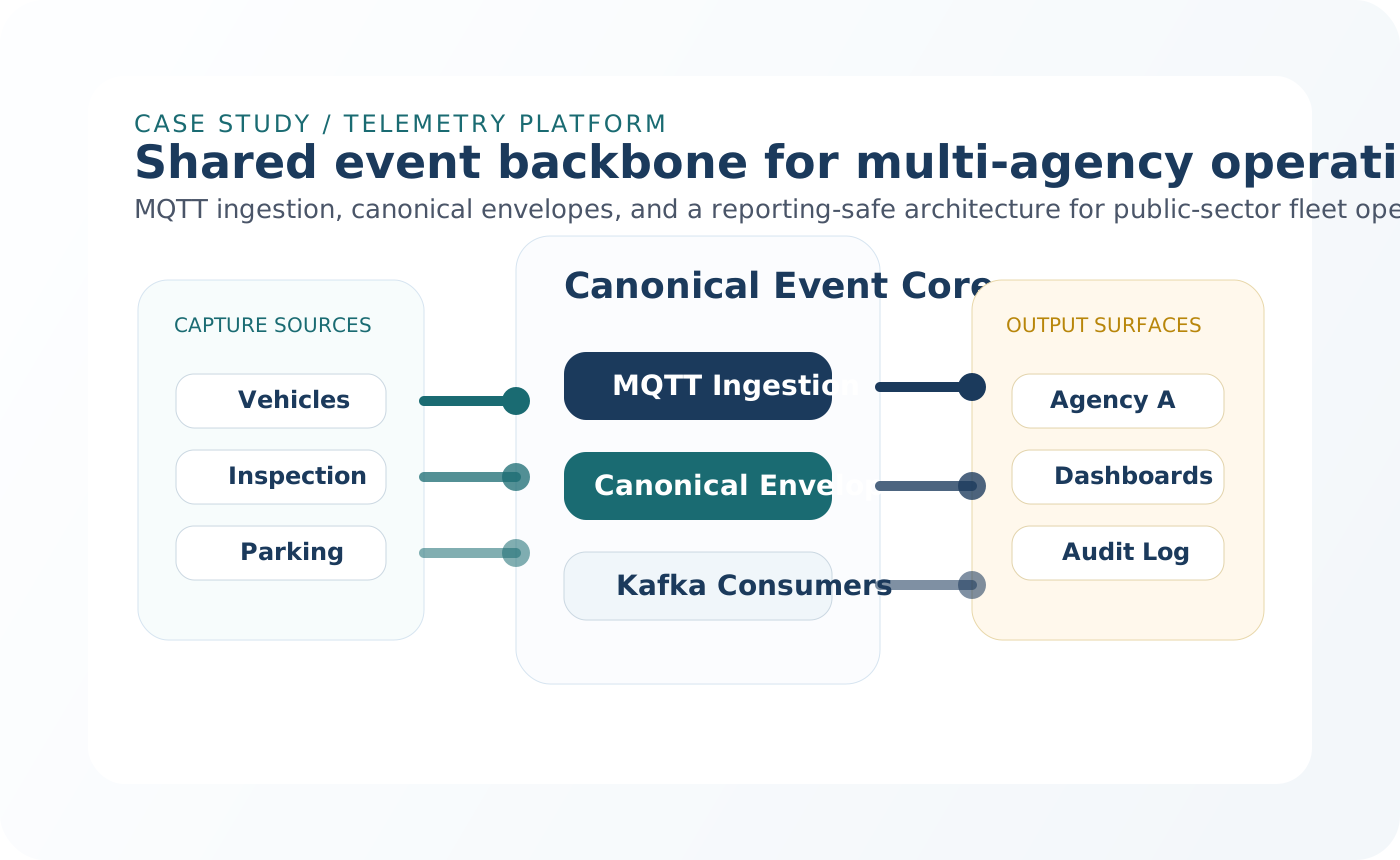
Architecture

System design shown as an operational topology, not a decorative diagram.

The architecture visual is intended to show how edge capture, buffering, transport, event processing, and operator-facing systems fit together under real deployment constraints.

Telemetry Backbone

Event-Driven Telemetry Architecture for 10,000+ Heterogeneous Government IoT Devices

Multi-agency ingestion and event normalization separated from reporting surfaces for operational stability.

Architecture diagram of a government telemetry platform showing GPS vehicles, impound devices, parking systems, and inspection units normalized into MQTT and Kafka pipelines, then routed to agency-specific dashboards and audit services.
Event-Driven Telemetry Architecture for 10,000+ Heterogeneous Government IoT Devices

What to look for

  • Offline resilience and deterministic recovery are treated as first-class design concerns.
  • Operational visibility is separated from ingestion reliability so reporting never destabilizes capture.
  • Protocol choices reflect topology and failure modes, not just team familiarity.
4,150+ Tracked government vehicles
6,000 Impound devices connected
4 Device types on one backbone

What I Would Do Differently

Build the device simulator before field deployment, not after. Several payload-normalization edge cases only appeared when real hardware began publishing malformed or delayed messages in production.

Stack

The implementation choices below reflect the boundary between field reliability, event architecture, and operator-facing systems.

NestJS Kafka MQTT Angular Docker Azure