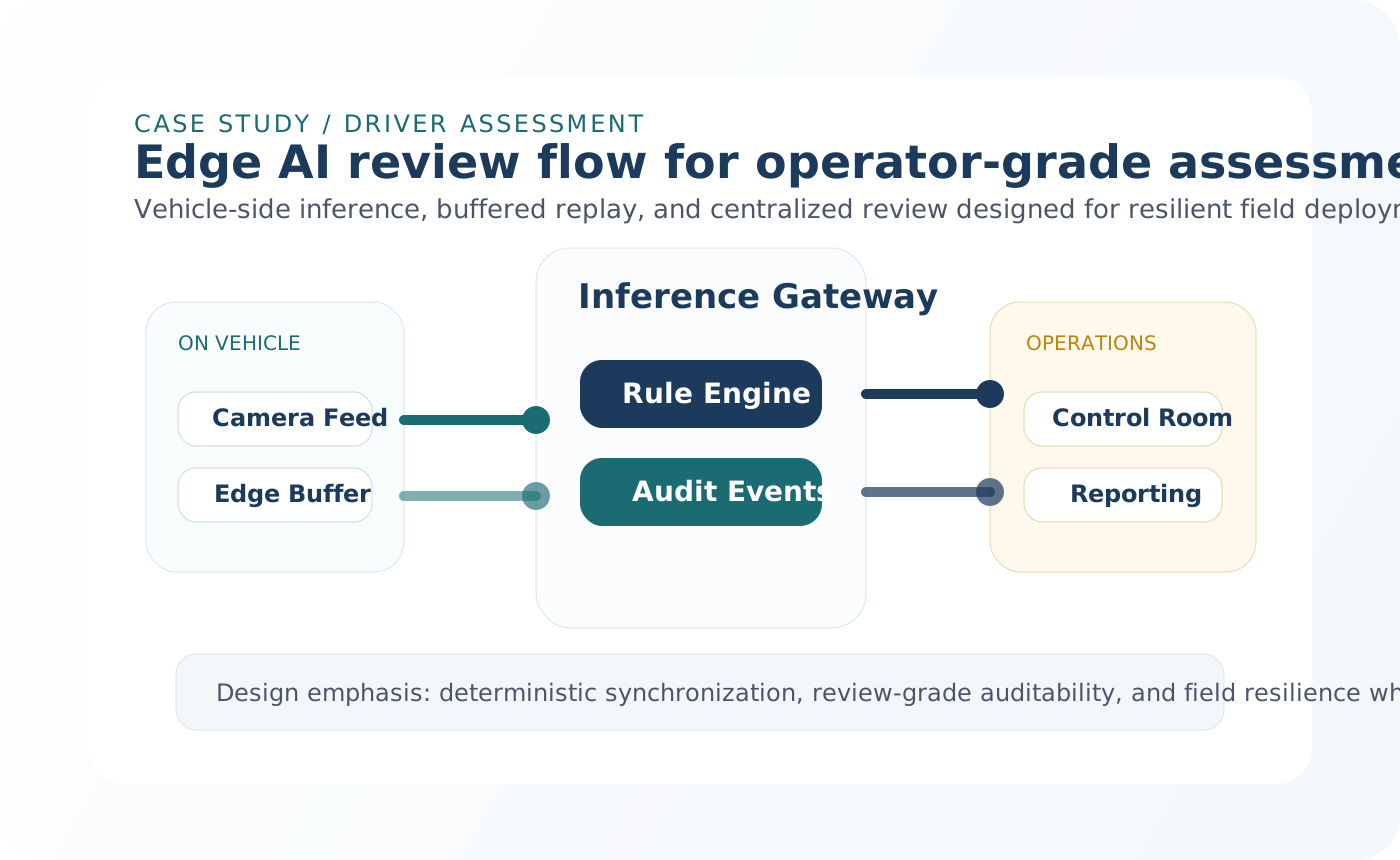
Problem
How do you run reliable AI and ANPR inference across embedded edge units operating inside moving vehicles, under harsh summer temperatures, with intermittent cellular connectivity, and still deliver a legally auditable result stream into a centralized government platform?
The design problem was not just inference accuracy. It was about preserving trust in the system when vehicles moved through poor coverage areas and when field hardware had to keep operating without a technician standing by.
Approach
- Chose edge-local inference over cloud inference because connectivity loss at road speed makes round-trip inference unreliable.
- Designed a deterministic local buffer so assessments could queue offline and flush in order when links recovered.
- Used device-type-specific Kafka topics to let ingestion, processing, and audit pipelines scale independently.
- Separated real-time telemetry on MQTT from audit-grade event streams on Kafka because the latency and reliability requirements were not the same.
- Added dead-letter handling so failed events could be reviewed without stalling the live assessment pipeline.
Outcome
The deployment processed more than 300,000 tests inside two years and contributed to a 25% operational efficiency gain versus the legacy process. Most importantly, it proved that edge intelligence and central auditability can coexist when connectivity is variable.